BIGSTORY Network


Supreme Court of India March 12, 2026, 4:36 p.m.

Ending Hostile Discrimination: Supreme Court Rules Salary Alone Cannot Determine OBC Creamy Layer

By striking down a controversial two-decade-old government loophole, the apex court has restored reservation rights for thousands of civil service candidates from PSU and private sector families.

by Author Brajesh Mishra
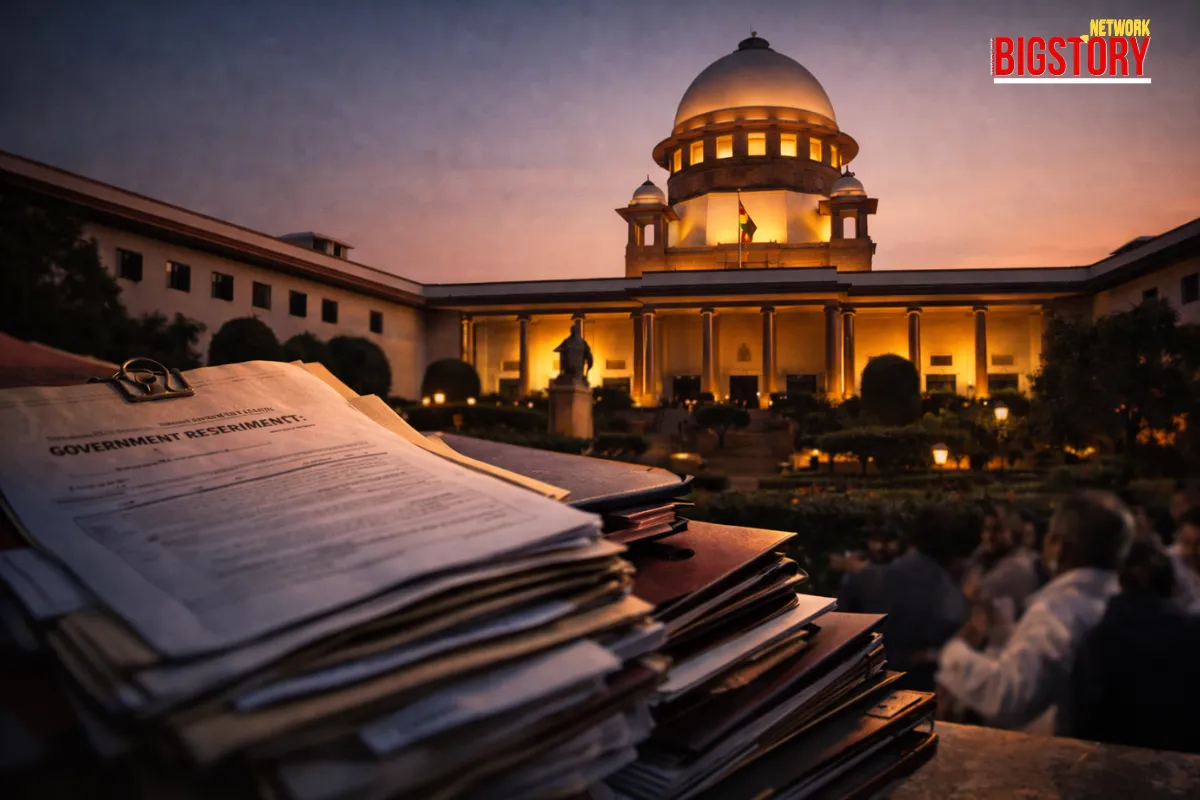
Hero Image

⏱️ 30-Second Brief

Expand to Read

What happened: The Supreme Court ruled that parental income or salary alone cannot be the sole deciding factor for placing an OBC candidate in the 'creamy layer'. Why it happened: The government had been using a 2004 clarification to deny reservation benefits to UPSC candidates whose parents worked in PSUs or the private sector simply because their salary crossed the limit. The strategic play: The Supreme Court struck down the 2004 letter, ruling that the 'creamy layer' must be determined by evaluating a parent's social status and post category, not just mechanical salary aggregation. India's stake: The judgment restores the original intent of the Mandal Commission quotas, ensuring that the children of middle-class PSU and private employees do not face "hostile discrimination" compared to the wards of government servants. The deciding question: How quickly will the DoPT establish a formal post-equivalence framework for PSU and private sector jobs to implement the Supreme Court's status-based criteria without stalling ongoing government recruitment?

The legal landscape for affirmative action has fundamentally shifted following the landmark supreme court obc creamy layer parental salary 2026 judgment. On Wednesday, the Supreme Court of India officially struck down a controversial 2004 government directive, ruling definitively that 'creamy layer' status for Other Backward Classes (OBC) cannot be determined solely based on parental salary or income.

This crucial verdict resolves a deeply flawed administrative practice that mechanically clubbed together salaries to disqualify candidates, specifically penalizing those whose parents worked in Public Sector Undertakings (PSUs), banks, and private organizations. By declaring that true social backwardness must be evaluated through the lens of social status and post equivalence—not just fluctuating income brackets—the court has reopened the doors to fair employment for thousands of wrongly denied UPSC candidates.

How We Got Here

  • The Trigger: Following the historic 1992 Indra Sawhney judgment that birthed the "creamy layer" to exclude socially and economically advanced OBCs, the government issued a 1993 Office Memorandum (OM). This parent OM specifically excluded salary and agricultural income from the "income/wealth test."
  • The Background: Despite the 1993 guidelines, the Department of Personnel and Training (DoPT) issued a clarificatory letter on October 14, 2004. This letter controversially directed authorities to actively include parental salary to determine creamy layer status for employees of PSUs and private organizations where post equivalency wasn't formally established.
  • The Escalation: Over the years, successful civil service candidates repeatedly found themselves stripped of their hard-earned OBC Non-Creamy Layer (NCL) status simply because their parents' private or PSU salaries crossed inflation thresholds.
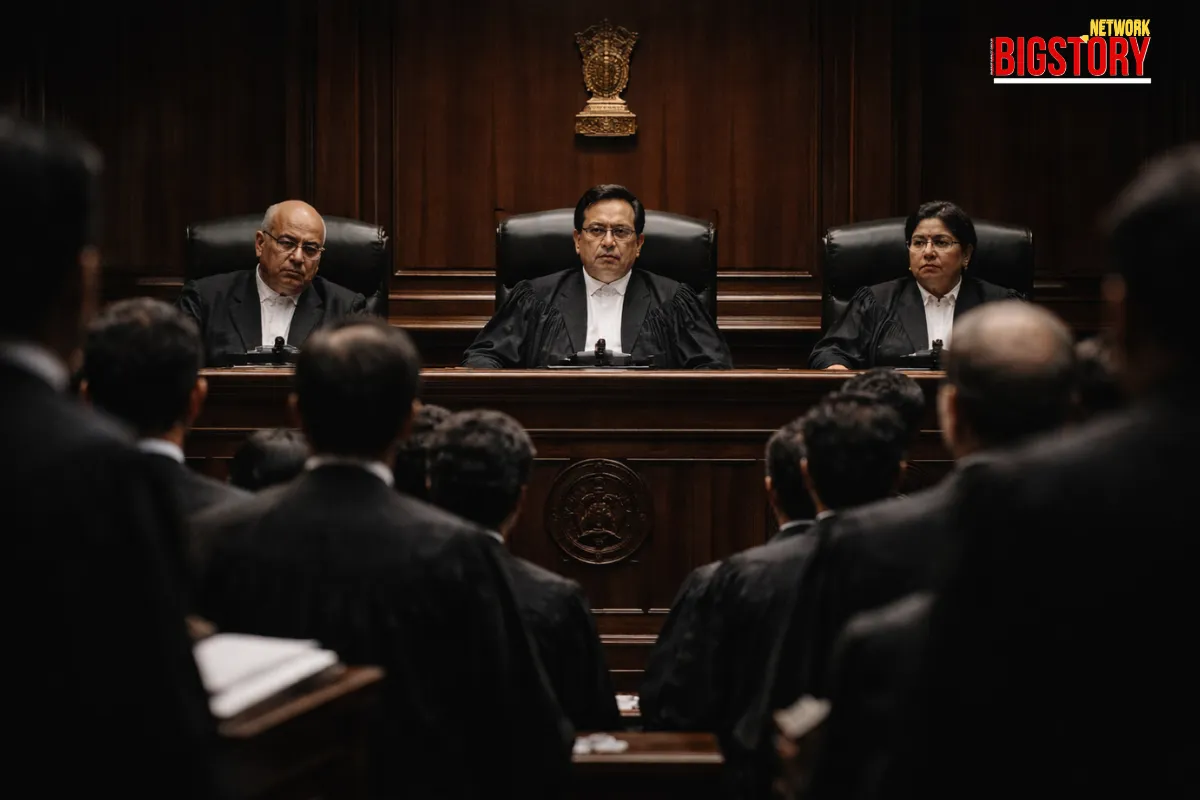
  • The Stakes: On March 11, 2026, a Supreme Court bench comprising Justices P.S. Narasimha and R. Mahadevan dismissed the Centre's appeals. They upheld rulings from three High Courts and struck down the 2004 letter as an instrument of "hostile discrimination."

The Key Players

Justice R. Mahadevan, Supreme Court of India Justice Mahadevan authored the decisive judgment, stating unequivocally that the 2004 clarification cannot override the parent 1993 policy. He emphasized that deciding creamy layer status solely on income brackets—without analyzing the category of posts—is "clearly unsustainable in law."

Union Public Service Commission (UPSC) Candidates These affected respondents are the successful civil service aspirants who waged a grueling legal war after being wrongly denied their IAS, IPS, and central service allocations. Their victory exposes the devastating career impact of administrative misinterpretation.

Department of Personnel and Training (DoPT) The central government body responsible for reservation criteria was heavily rebuked. Their reliance on the 2004 clarificatory letter to circumvent the true intent of the creamy layer doctrine was entirely invalidated, forcing an immediate bureaucratic overhaul.

The BIGSTORY Reframe — The End of "Hostile Discrimination"

Mainstream coverage understandably fixates on the ₹8 lakh income limit and historical recaps of the Mandal Commission. However, this coverage frequently glosses over the structural prejudice at the absolute heart of this case: the systemic "hostile discrimination" between public and private sector employees.

The invalidated 2004 DoPT circular created a brutally unfair two-tier system. For the children of government servants, the creamy layer was determined by their parents' official rank or post (Class I, Group A, etc.), actively ignoring their basic salary. But if an OBC candidate's parents worked as bank clerks, PSU staff, or in corporate jobs, authorities simply added up their salaries. If the number crossed the threshold—often just due to regular inflation or dearness allowances—the child was classified as "creamy layer" and stripped of the quota.

The Supreme Court's ruling destroys this double standard. It mandates that social backwardness must be evaluated uniformly regardless of who signs the parent's paycheck. A middle-class PSU salary that naturally crosses an inflation threshold does not miraculously erase a family's historical social disadvantages, and the court has ensured the law finally reflects that reality.

What This Means for India

  • Equivalence Framework Demanded: The DoPT must immediately establish clear, standardized "equivalence" frameworks that map PSU, banking, and private sector posts to their government equivalents, aligning fully with the 1993 OM.
  • Delayed Justice for UPSC Aspirants: The Supreme Court directed the government to reconsider the affected candidates' claims under the correct criteria and allocate their rightful service postings within six months, a massive relief for those stuck in bureaucratic limbo.
  • Certificate Revamps: State and central authorities must urgently update their verification guidelines for all ongoing recruitment drives, ensuring that local Tehsildars and district magistrates stop illegally aggregating salaries to deny OBC-NCL certificates.

The Implications

  • Short Term: Tens of thousands of OBC candidates preparing for the 2026-2027 civil service, banking, and SSC exams will find it significantly easier to secure valid Non-Creamy Layer certificates without being blocked by their parents' gross salary slips.
  • Medium Term: The DoPT will face a monumental administrative backlog as it races to rewrite its official memoranda and implement the post-equivalence tables required to prevent further litigation.
  • India-Specific Consequence: By decoupling pure economic income from social status, the judiciary has reaffirmed the constitutional principle that Indian reservations are fundamentally an instrument of social justice and representation, not merely a poverty-alleviation scheme.

If an honest salary increase was enough to disqualify an entire generation of PSU and private sector families from their constitutional rights, how many deserving candidates has the system already lost since 2004?

Sources

News & Wire Coverage:

Official Statements & Data:

  • Court Record: Supreme Court of India strikes down 2004 DoPT clarificatory letter — March 11, 2026
  • Government Document: DoPT Office Memorandum on OBC Creamy Layer criteria — September 8, 1993


Brajesh Mishra
Brajesh Mishra Associate Editor

Brajesh Mishra is an Associate Editor at BIGSTORY NETWORK, specializing in daily news from India with a keen focus on AI, technology, and the automobile sector. He brings sharp editorial judgment and a passion for delivering accurate, engaging, and timely stories to a diverse audience.

BIGSTORY Trending News! Trending Now! in last 24hrs

Ending Hostile Discrimination: Supreme Court Rules Salary Alone Cannot Determine OBC Creamy Layer
Supreme Court of India
Ending Hostile Discrimination: Supreme Court Rules Salary Alone Cannot Determine OBC Creamy Layer
The End of the Legal Agony: How the Supreme Court Redefined Passive Euthanasia in India
Supreme Court of India
The End of the Legal Agony: How the Supreme Court Redefined Passive Euthanasia in India
The Judicial Takeover: How the Supreme Court Commandeered Bengal’s Fractured Election Machinery
Supreme Court of India
The Judicial Takeover: How the Supreme Court Commandeered Bengal’s Fractured Election Machinery
The Punchline and the Pendency: What the Supreme Court's Onion-Garlic PIL Exposes About Judicial Abuse
Supreme Court of India
The Punchline and the Pendency: What the Supreme Court's Onion-Garlic PIL Exposes About Judicial Abuse